Factors Affecting the Quality & Price
The value of a Yellow Sapphire ring is shaped by a combination of factors — its origin, color, clarity, carat weight, cut, metal, and overall craftsmanship. Each detail influences how rare, beautiful, and long-lasting the gemstone will be. Understanding these elements helps you choose a ring that not only looks stunning today, but also holds value for years to come
Origin
The origin of a Yellow Sapphire plays a major role in determining its brilliance and price. Sapphires from Sri Lanka (Ceylon) and Myanmar (Burma) are considered among the finest, admired for their superior clarity and rich, luminous golden tones. Madagascar and Thailand also produce Yellow Sapphires, though consistency in quality can vary from stone to stone. When a gemstone comes from a premium origin, it typically offers better sparkle, purity, and long-term value.
Colour
Colour is the most defining characteristic of Yellow Sapphire. The most desirable stones display vivid golden shades, ranging from deep canary yellow to bright sunshine hues. Pale, faded, or brownish stones are less valuable because they lack vibrancy. Unheated, naturally bright sapphires command the highest prices, as their natural colour remains stable and beautiful over time without fading.
Clarity
Like all natural gemstones, Yellow Sapphires may contain inclusions. These tiny formations prove authenticity, but the fewer visible inclusions there are, the higher the value. A high-quality Yellow Sapphire will appear clean, transparent, and radiant, allowing light to pass through effortlessly. Stones that look cloudy or heavily included lose brilliance and therefore cost less.
Carat (Weight)
Carat weight directly affects price, but size alone doesn’t determine value. Larger Yellow Sapphires — especially those above three carats — are rare and significantly more expensive. However, a smaller stone with exceptional color, clarity, and cut can easily be more valuable than a larger but dull gemstone. The key is finding the right balance between weight and beauty.
Cut
The cut of a Yellow Sapphire determines how beautifully it reflects light. Well-cut stones appear lively, sparkling, and full of depth, while poorly cut sapphires can look flat or lifeless. Popular cuts such as oval, cushion, round, and faceted styles enhance brilliance and make the color appear richer. Skilled cutting brings out the gemstone’s natural glow and dramatically improves its elegance.
Metal Setting
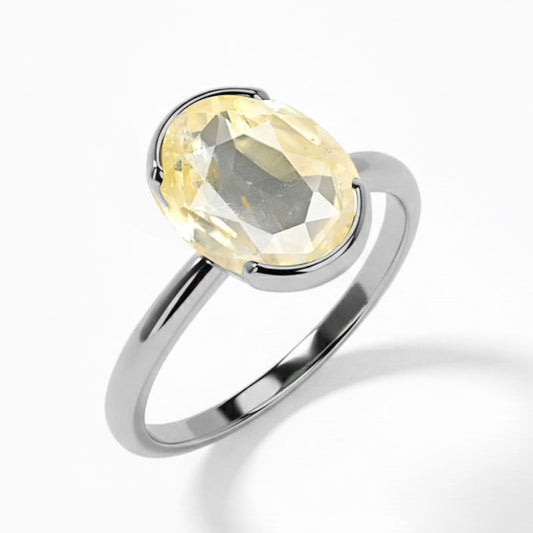
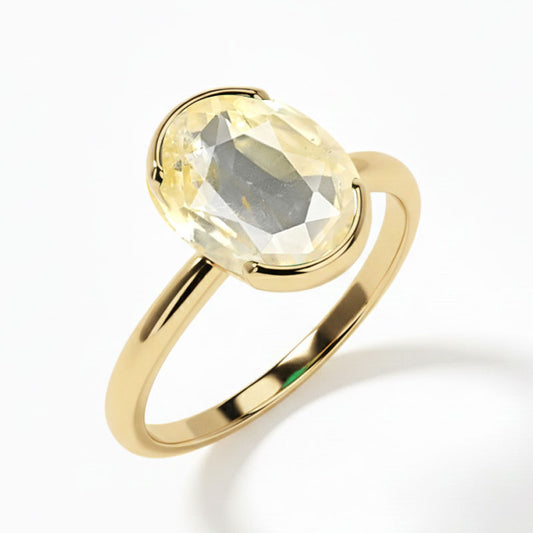
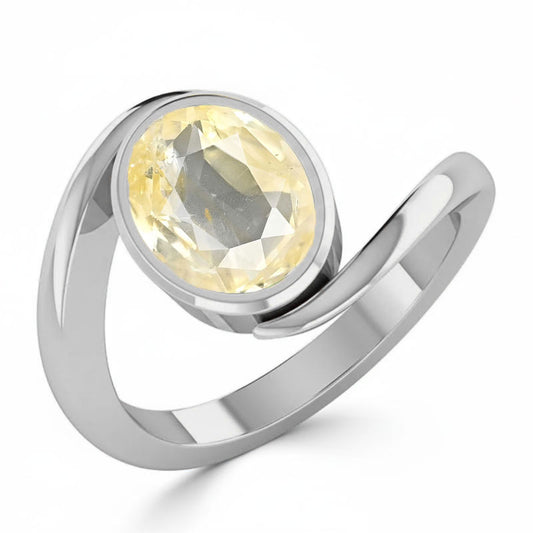
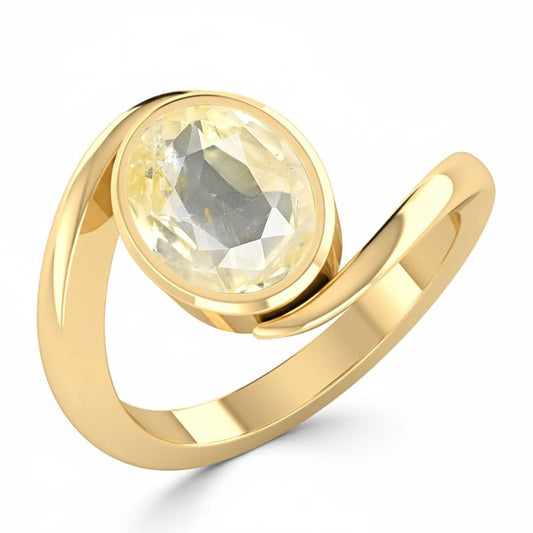
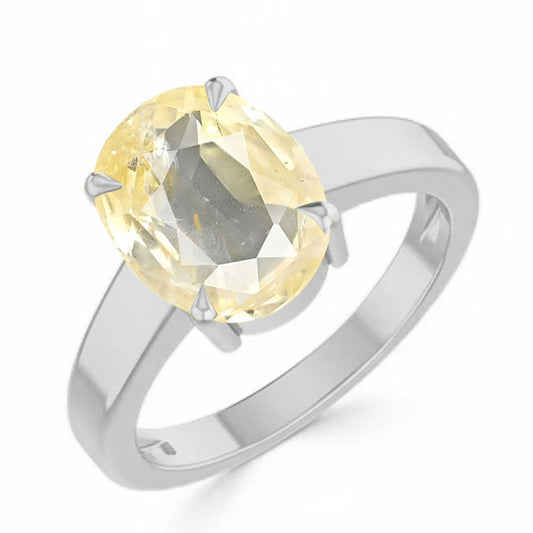
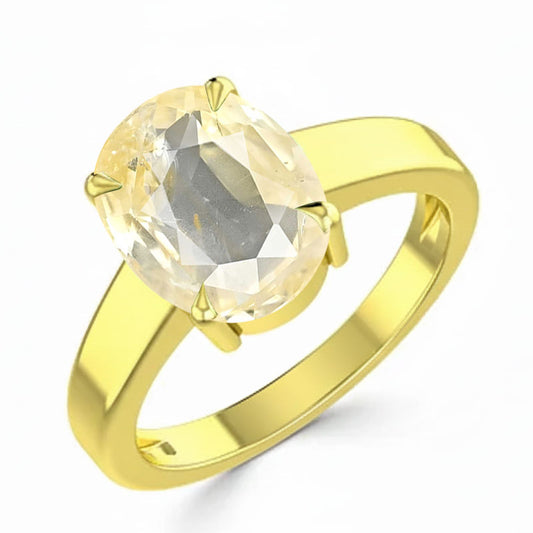
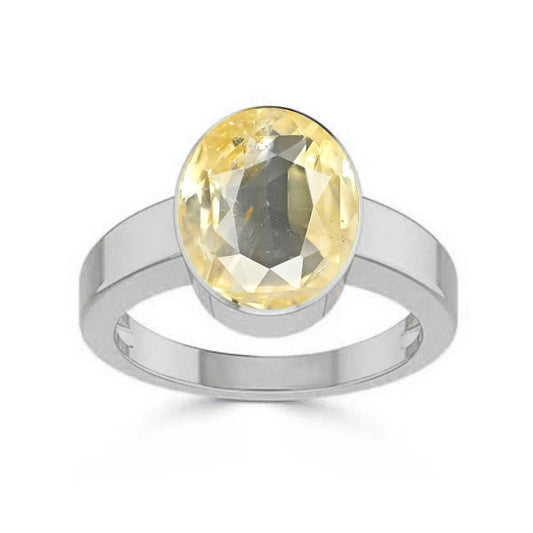
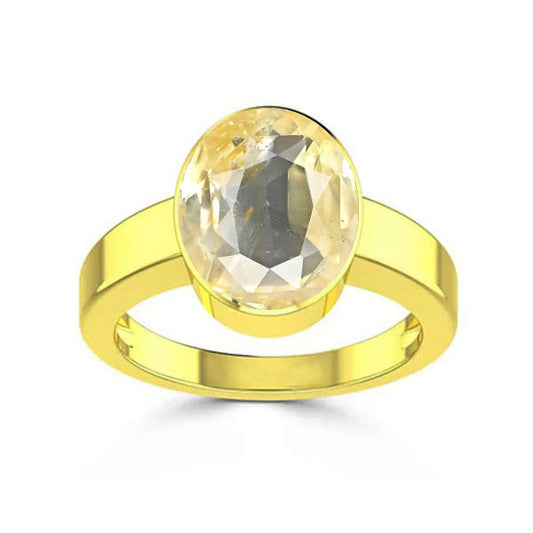
The metal used in the ring enhances both the sapphire’s look and its price. Yellow gold intensifies warmth and richness, while white gold or platinum creates striking contrast for a contemporary feel. Rose gold adds a soft, romantic vintage touch. Platinum settings are the most durable but also the most expensive, making metal selection an important aesthetic and budget decision.
Design & Craftsmanship
The design of a Yellow Sapphire ring adds personality, exclusivity, and value. Minimalist designs keep the focus on the gemstone, while detailed settings with diamonds or intricate patterns add luxury and grandeur. Custom-made rings offer uniqueness but may cost more depending on craftsmanship and additional stones. A thoughtfully designed piece not only looks sophisticated but also enhances the gemstone’s natural elegance.